Redheaded Flea Beetle
(Systena frontalis (Fabricius, 1801))
Rebekka Horn, Graduate Research Assistant, University of Tennessee
Midhula Gireesh, Assistant Professor, University of Tennessee
What are redheaded flea beetles?
Redheaded flea beetles (RHFB) are an important native beetle pest of container-grown ornamental plants. The number of generations per year is dependent on the location, weather, and humidity.
Adult RHFB identification
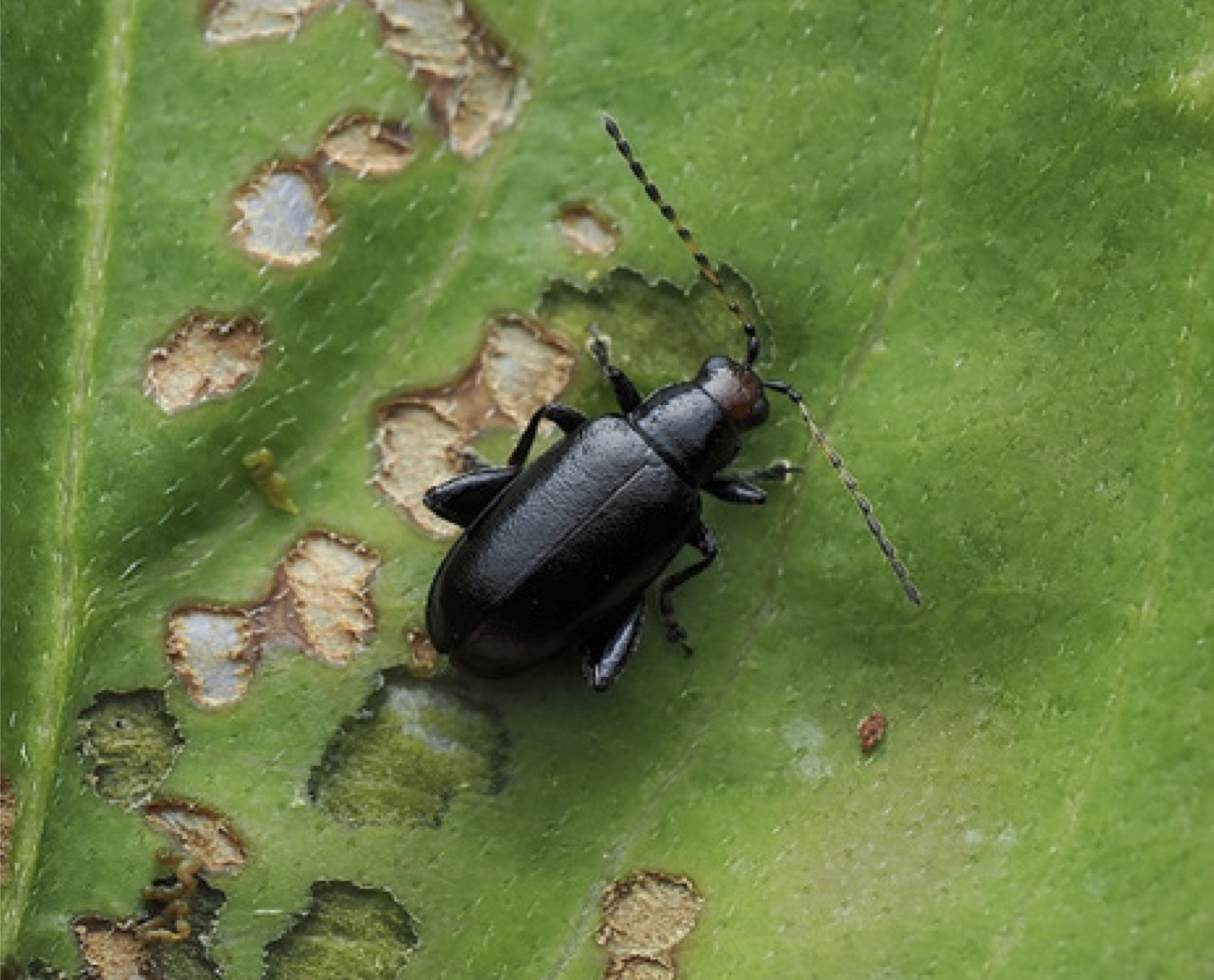
Adult RHFB are tiny beetles (2.5-6.25mm long) that are metallic black with reddish heads (indicated by the orange arrow in the picture below). Adult RHFB also have long, light-brown serrate (toothed) antennae that are located below the eyes. Additionally, RHFB have enlarged femurs that allow them to jump between plants. Female RHFB are slightly larger than males.
Lifecycle of RHFB
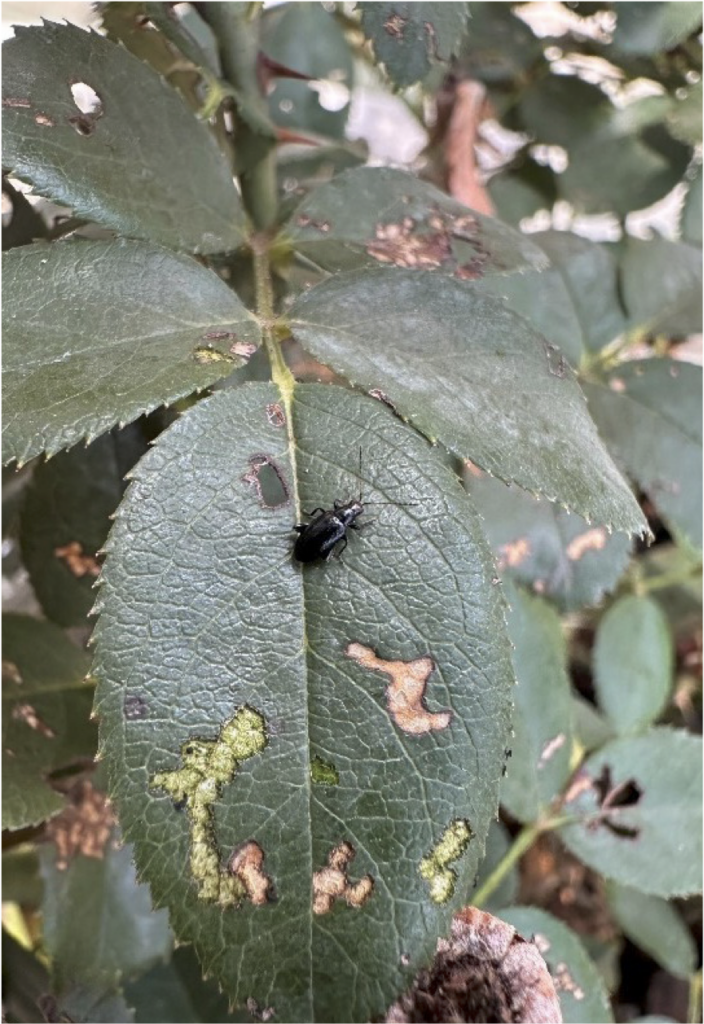
Eggs: Female RHFB lay oval, pale yellow eggs in potting medium. Eggs are anywhere from 0.7- 0.9 mm in size. This life stage overwinters in the soil.
Larvae: Larvae are creamy-white with a brown head capsule, have 3 pairs of legs, and can be 5.1-10mm long. Larvae are identified by the upward projection with fine hairs at the end of their abdomen. Larvae develop through 3 instars and feed on the roots in the soil.
Pupae: Pupae are in the soil. Adults hatch and are active during late May until October.
Adults: For more information, please see the “Adult RHFB Identification” section.
Hosts & damage of RHFB
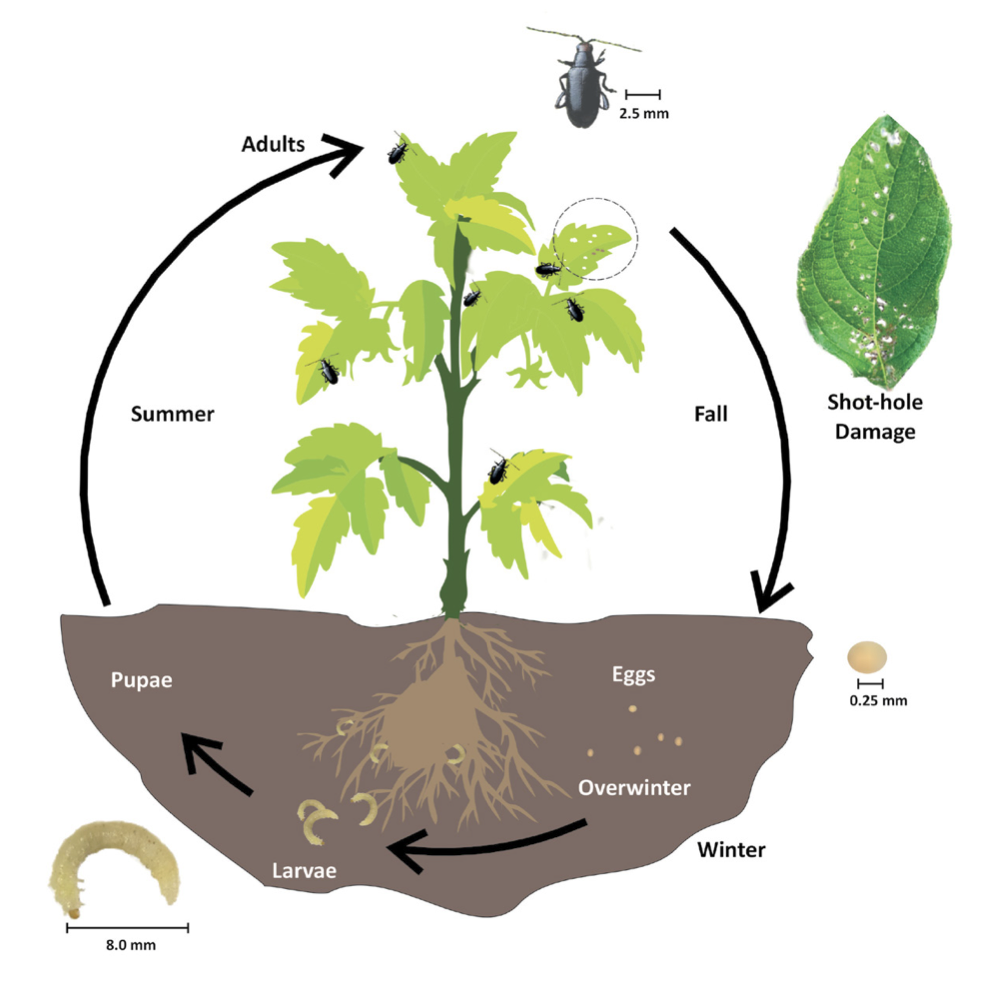
Adult RHFB feed on a wide variety of host plant species. Around nurseries, RHFB can feed on weeds as an alternate food source. However, nursery crops and woody ornamentals that are affected include:
- Panicle hydrangeas
- Roses
- Crape myrtle
- Dogwood
- Etc.
RHFB can cause extensive damage to foliage in nurseries and landscapes by feeding on the upper and lower surfaces of leaves. Damage caused by this pest affects the aesthetic quality and marketability of the affected plants. Damage symptoms include:
- Necrotic leaf spotting
- Shot-hole damage/skeletonization of leaves
Monitoring for RHFB
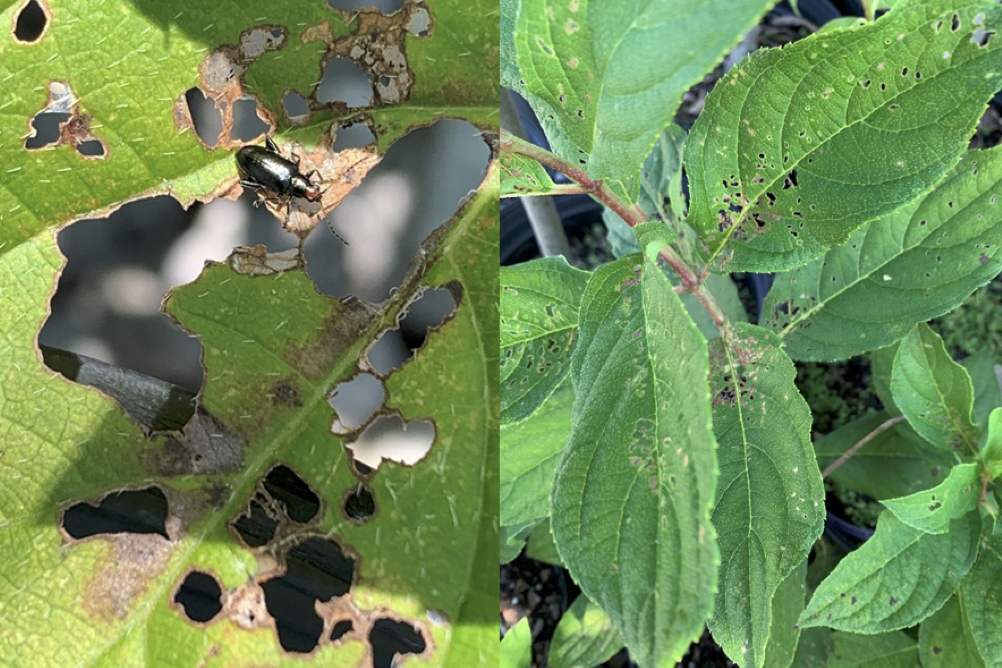
Monitoring eggs and larvae of RHFB is challenging as they live in the soil. Here are some tips for monitoring the population in the roots and adults on the leaves:
- Keeping the soil moist before examining the roots prevents larvae from burrowing in the soil
- Sticky cards, light cards (adults)
Management for RHFB
Biological control:
- Entomopathogenic nematodes (Steinernema carpocapsae)
- Entomopathogenic fungi (Beauveria bassiana, etc.)
Cultural control:
- Weed management around the nursery
- Avoid placing newly propagated plants near the infested plants
Chemical control – the following active ingredients can be used to help control RHFB populations:
- bifenthrin, cyfluthrin, dinotefuran, etc.
Resources
- Gireesh M, Dhakal K, Addesso KM. 2025. Redheaded flea beetle. University of Tennessee Extension (W1289). https://utia.tennessee.edu/publications/wp-content/uploads/sites/269/2025/03/W1289.pdf