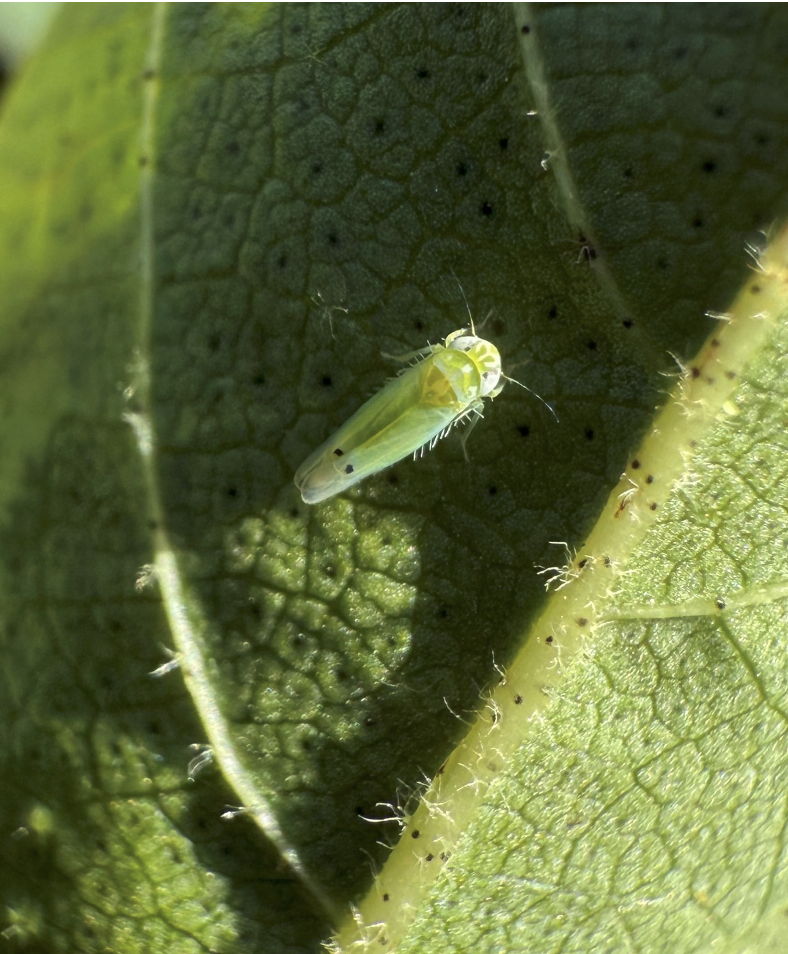
Two-spot Cotton Leafhopper
(Amrasca biguttula (Ishida, 1912))
Rebekka Horn, Graduate Research Assistant, University of Tennessee
Shimat Joseph, Associate Professor, University of Georgia
Midhula Gireesh, Assistant Professor, University of Tennessee
What are two-spot cotton leafhoppers?
Two-spot cotton leafhoppers (TSCL) are a highly invasive planthopper that targets agricultural and ornamental plants that spread very quickly. TSCL has multiple host plants, which are currently being studied in the United States. TSCL can complete up to 11 generations per year, depending on location, temperature, and humidity.
Adult TSCL identification
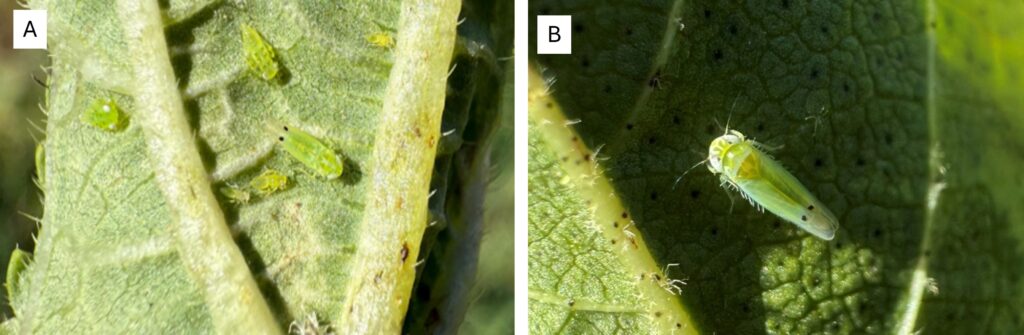
Adult TSCL are very small (~2-3 mm) in size, are green, and have two distinctive dark spots on the wings. Adults can live ~2-3 weeks.
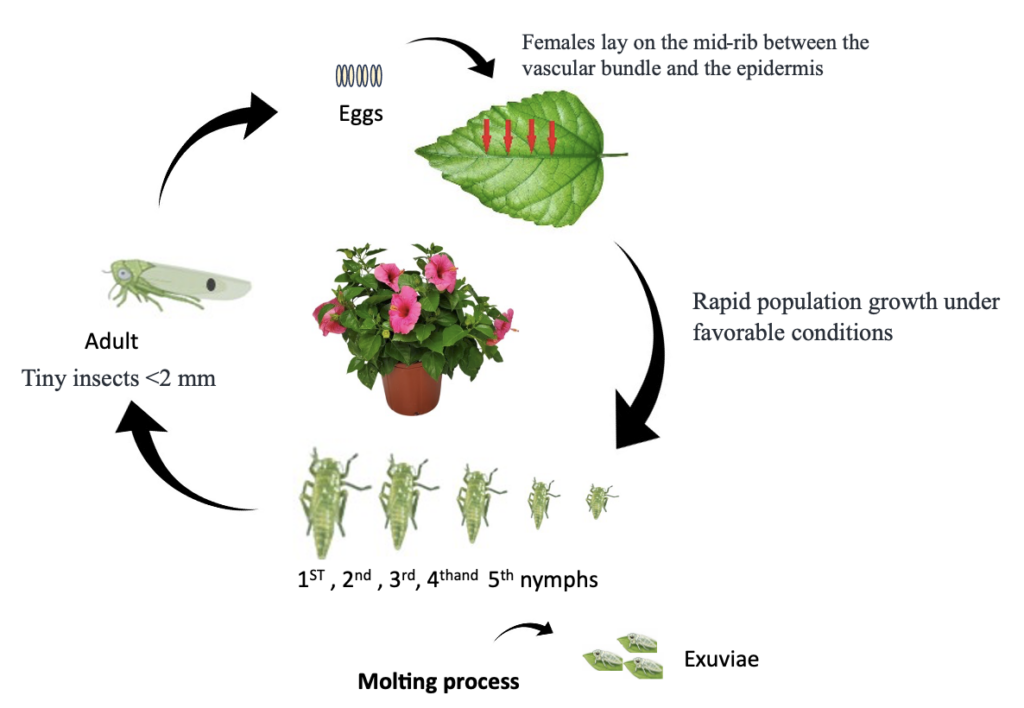
Lifecycle of TSCL
Eggs: ~20-25 eggs are laid by female TSCL in the leaf midrib.
Nymphs: There are 5 nymphal stages that progress in 8-11 days.
Adults: Please see the “Adult TSCL Identification” section for more details.
Hosts & damage of TSCL
TSCL feeds on economically important crops and ornamentals. Research is being conducted on the host range of TSCL in the United States. Ornamentals that TSCL targets include:
- Turk’s cap
- Sunflower
- Pot Marigold
- Yellow bells
- Etc.
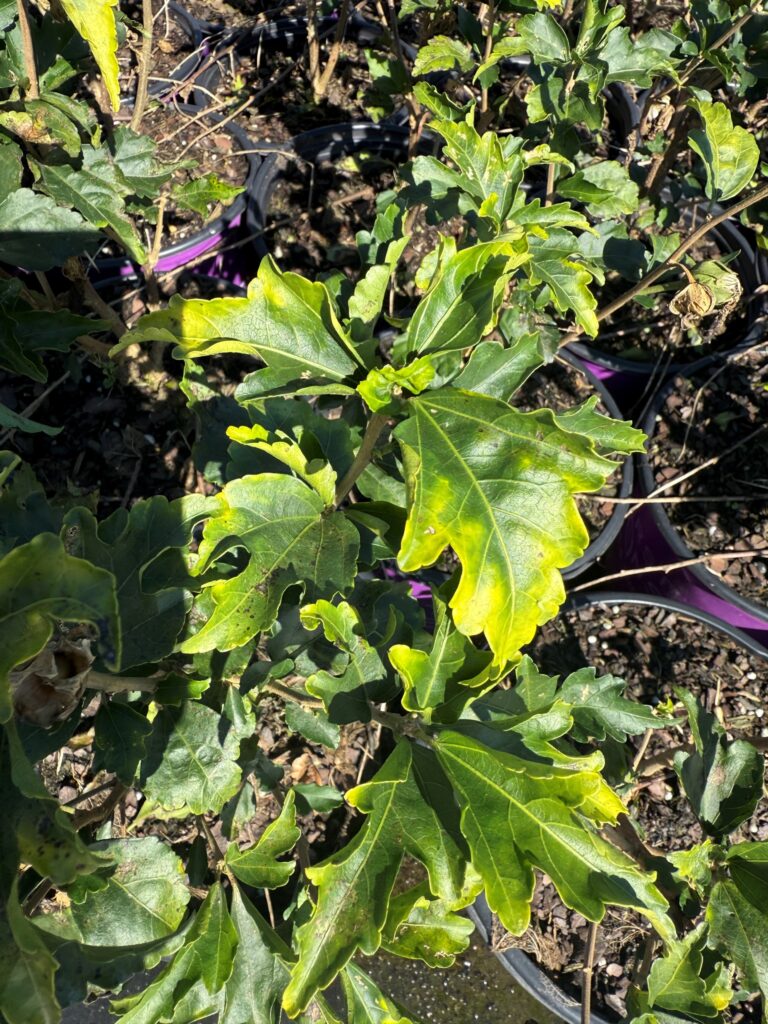
TSCL have piercing-sucking mouthparts, which cause damage to plants. First symptoms of damage include:
- Yellowing along the leaf margins
- Browning and necrotic areas on leaves
- Leaf curl and distortion
- Stunted growth or fewer flowers/fruits
Due to overlapping populations of TSCL, leafhoppers can be present on both sides of the leaves.
Monitoring for TSCL
Like all major insect pests, monitoring is extremely important to determine if TSCL populations are present. Recommended monitoring techniques include:
- Visual observation of leaves and plants. NOTE: When receiving plants, quarantine the new plants and carefully inspect all plant material for signs of TSCL for 7 days. This 7 day period will allow you to observe any new nymphal emergence if TSCL is present.
- Yellow sticky cards
- Beat sheet sampling
Management for TSCL
Cultural control: the following cultural control options can help local populations of TSCL:
- Removal of heavily infested plants
- High water sprays/use of vacuums
- Managing weed hosts around nurseries
Chemical control – the following active ingredients can be used to help control TSCL populations:
- buprofein, novaluron, pyriproxyfen
Resources
- Attia S, Joseph SV. 2026. Comparative impact of insect growth regulators on mortality and development on Amrasca biguttula (Hemiptera: Cicadellidae). Plos One. 21(6):e0350736.
- Continentino L. 2026. The two-spot cotton leafhopper: identification, symptoms, and management. University of Florida | IFAS Blogs. https://blogs.ifas.ufl.edu/monroeco/2026/02/06/the-two-spot-cotton-leafhopper-identification-symptoms-and-management/
- Prade P. 2025. Invasive insect: two-spotted cotton leafhopper. PennState Extension. https://extension.psu.edu/invasive-insect-two-spotted-cotton-leafhopper