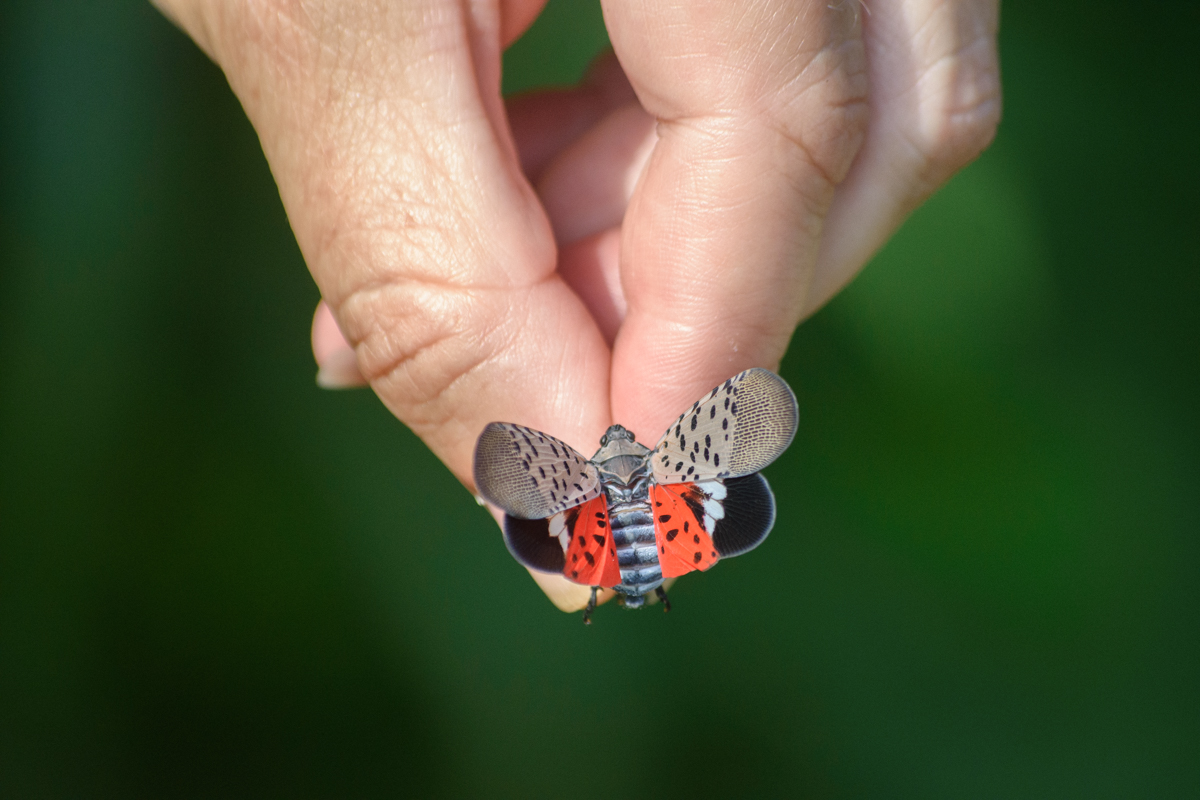
Spotted Lanternfly
(Lycorma delicatula (White, 1845))
Rebekka Horn, Graduate Research Assistant, University of Tennessee
Midhula Gireesh, Assistant Professor, University of Tennessee
TAKE ACTION!
““Think you have found spotted lanternfly at your location in Tennessee? If so, please help!”
In Tennessee, spotted lanternfly (SLF) was originally reported by a homeowner in Davidson County and was later confirmed by the Tennessee Department of Agriculture in September 2023. Since 2023, SLF has been confirmed in 7 counties. Please see the chart below for more details:
| County with confirmed SLF infestation | Year that county infestation was confirmed |
|---|---|
| Davidson County | 2023 |
| Wilson County | 2023 |
| Sullivan County | 2024 |
| Sumner County | 2025 |
| Jefferson County | 2025 |
| Hamilton County | 2025 |
| Knox County | 2025 |
If you are NOT in Davidson, Wilson, Sullivan, Jefferson, Sumner, Hamilton, OR Knox Counties, please report SLF directly to the Tennessee Department of Agriculture by clicking on the link provided below:
Multiple southeastern states have banded together to form the Southern Spotted Lanternfly Working Group. On this website, you can find more information about SLF and its host range, life stages, life cycle, and research priorities being conducted by the group. Additionally, this website offers a reporting page, where you can report SLF. Click on the link below to learn more information:
What are spotted lanternflies?
Spotted Lanternflies (SLF) are a highly invasive insect that was detected in the United States (Pennsylvania) in 2014. These insects feed on the sap of trees via piercing-sucking mouthparts. In large numbers, SLF can cause significant damage to plants. SLF have one generation per year.
Adult SLF identification
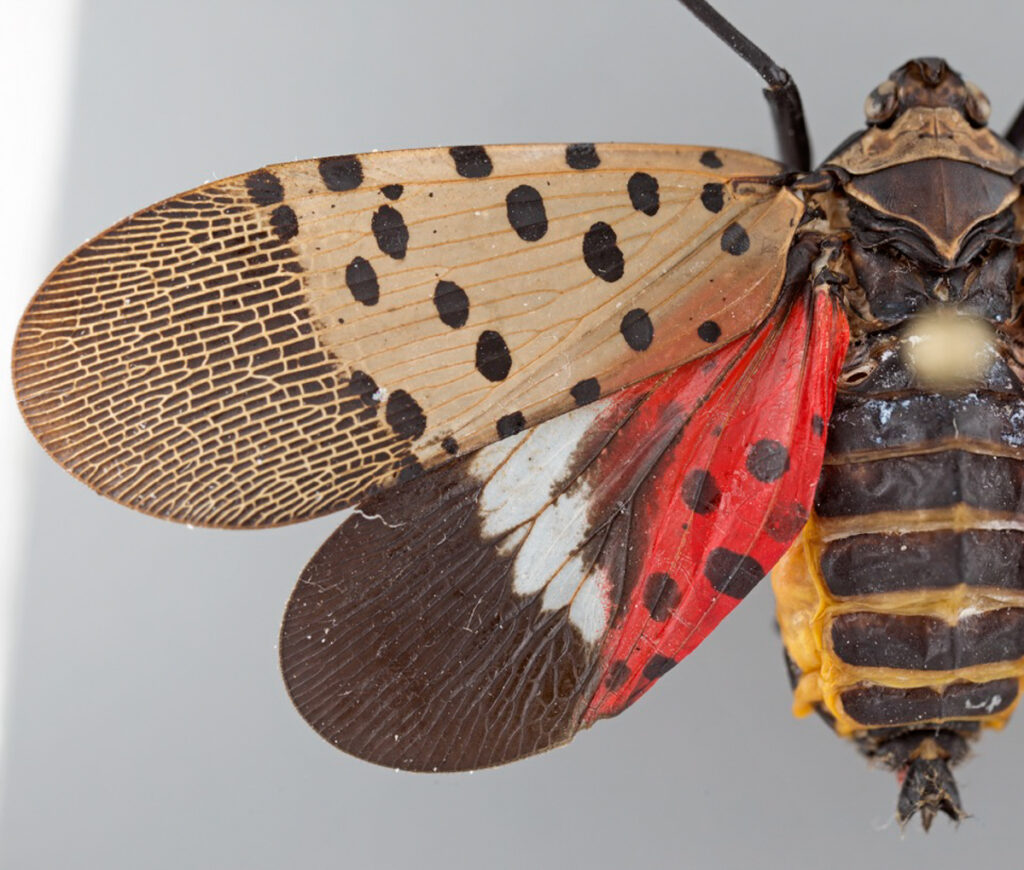
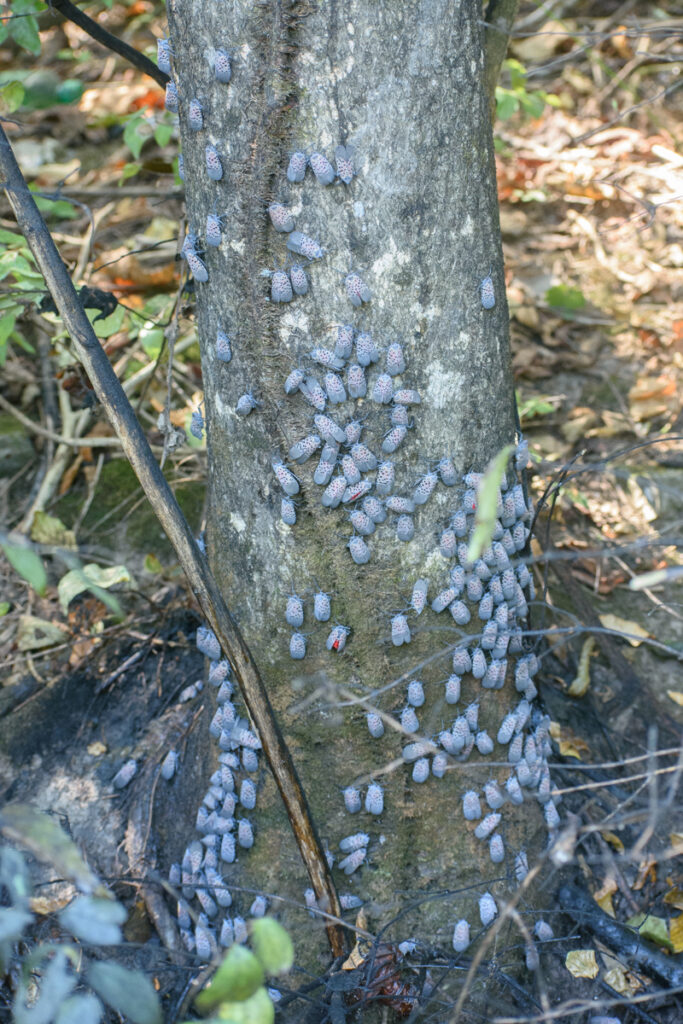
SLF have piercing sucking mouthparts, which differentiates them from butterflies and moths. Adults have tan forewings with a black bar, brick-like pattern. Their hindwings are very colorful, with red, white, and black bars. Adult SLF have yellow bodies with black bands, which are most noticeable in females that are about to lay eggs.
Males and females are differentiated by size (with females larger than males) and a red set of valvifers that allow females to lay eggs.
Lifecycle of SLF
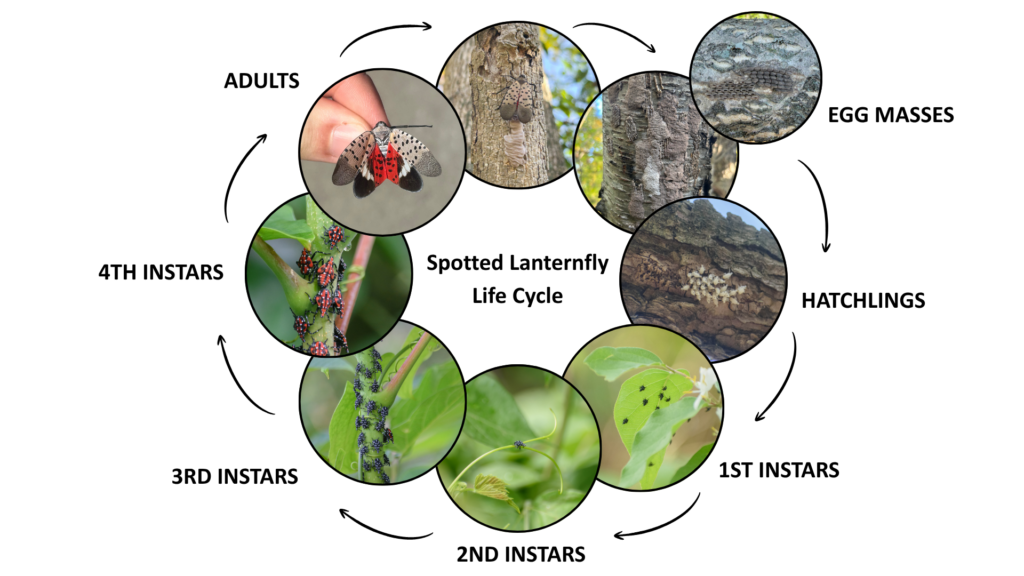
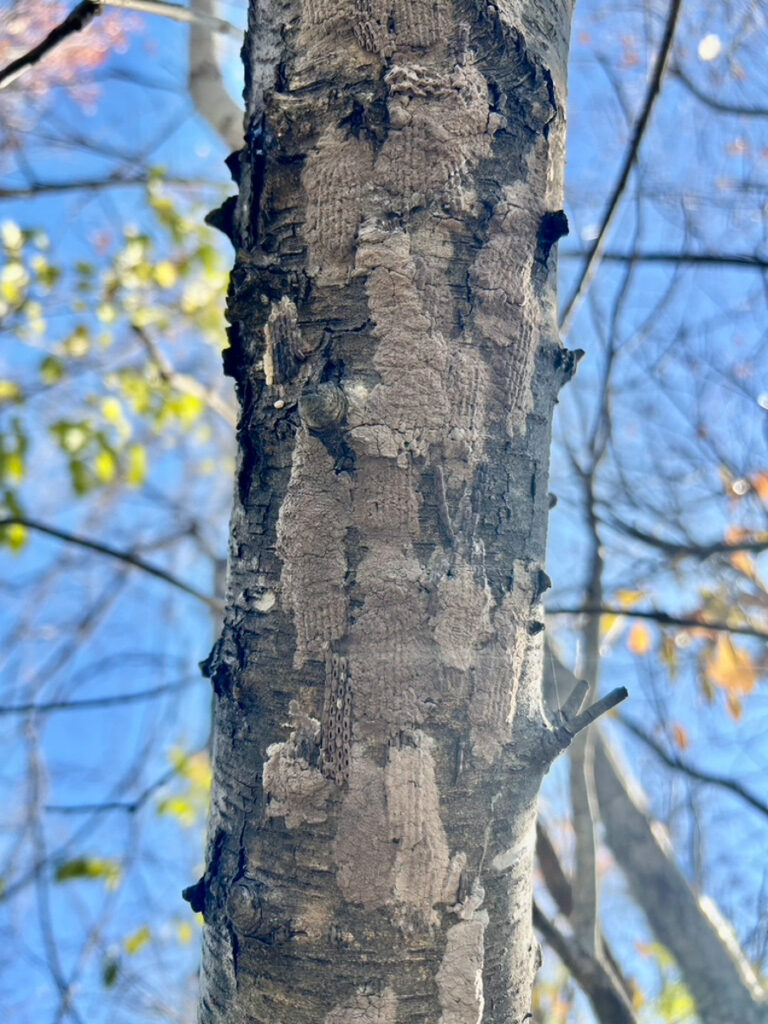
Eggs: Eggs are laid in masses and are chocolate brown. Eggs are coated in a smooth, waxy coating by the female, which gives them a cryptic appearance and allows them to further blend into their environment. This waxy coating also protects egg masses through the harsh winter months. SLF overwinters as egg masses in this stage. Additionally, egg masses are laid on any type of surface, which makes it hard to predict where they will be laid.
Nymphs: SLF develop in 4 nymph stages, but are easier to categorize into early instars and late instars:
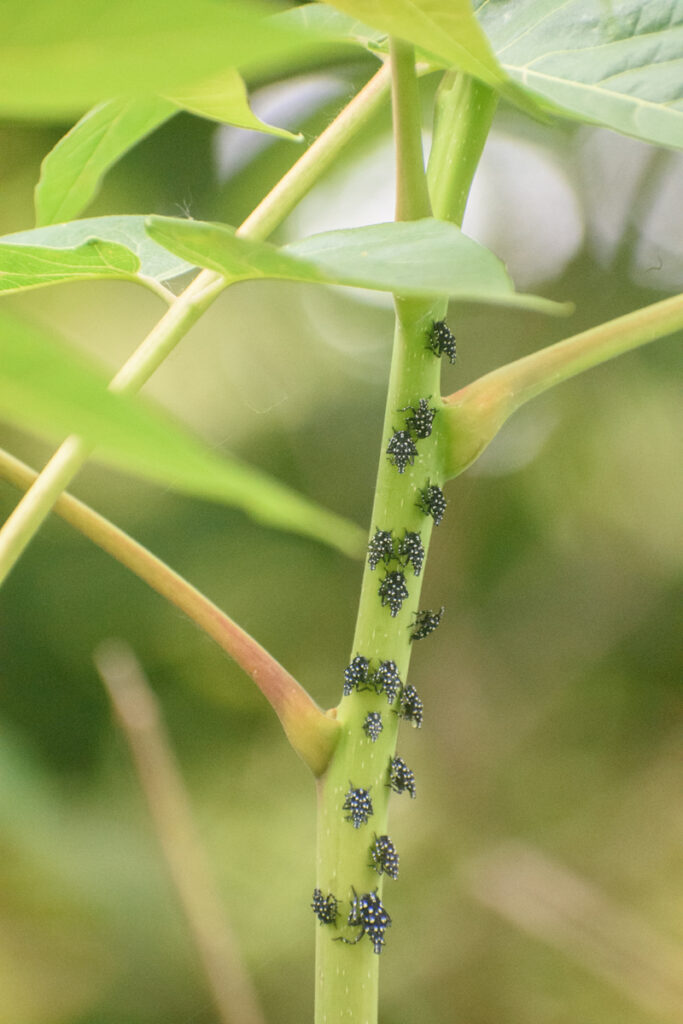
- Early instars: 1st, 2nd, and 3rd instar nymphs are black with white spots but differentiate in size.
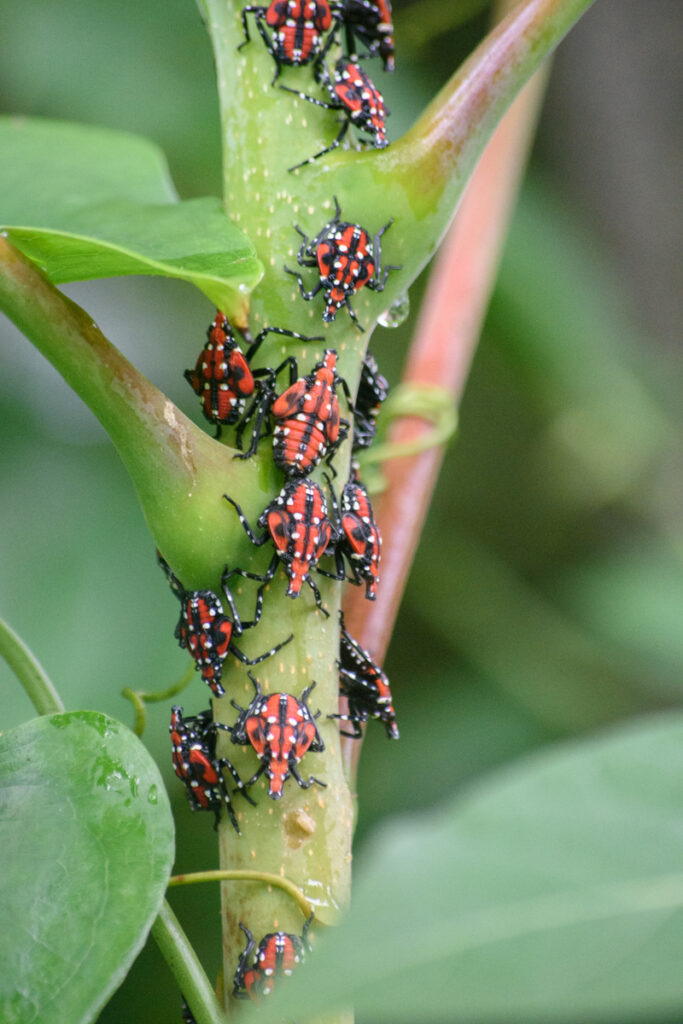
- Late instars: 4th instars are red with black-and-white markings. The late instars are more noticeable compared to the others and are an indication that the adults will hatch soon.
Adults: Please see the “Adult SLF Identification” section for more details.
Hosts & damage of SLF
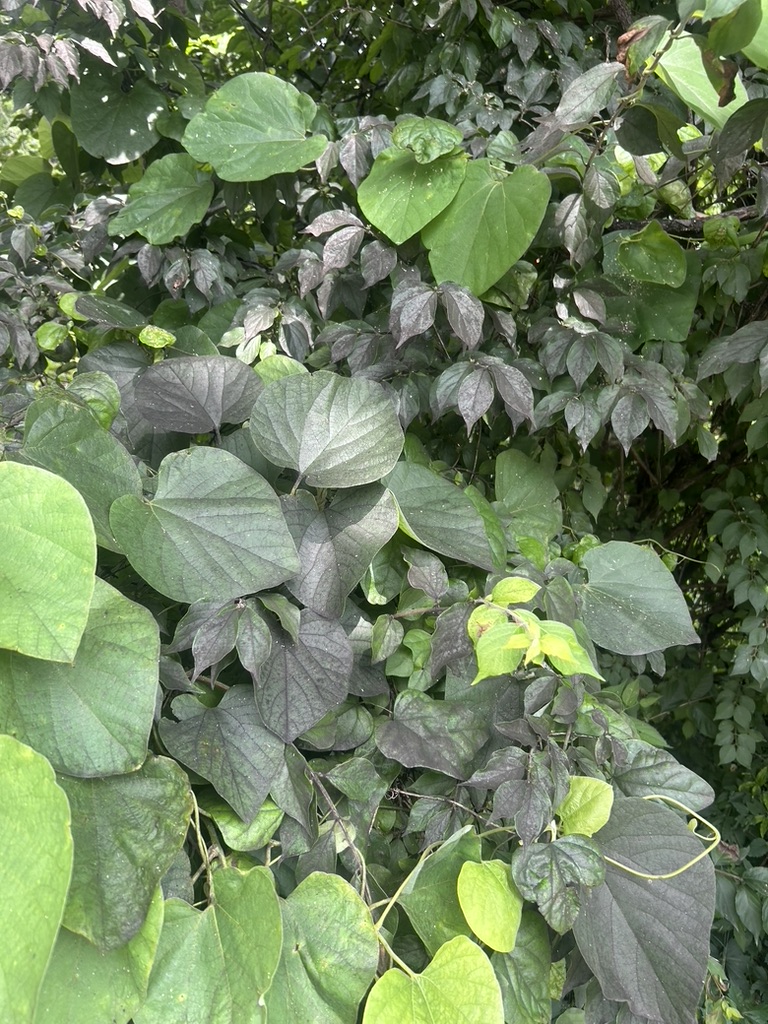
SLF feeds on over 103 different plant species worldwide. Early-instar nymphs have a wider host range, but as SLF develops into late-instar nymphs and adults, it ultimately prefers hosts such as tree of heaven, black walnut, and grape. However, SLF also feeds on the following:
- Silver maple
- Red maple
- Willow
- Butternut
- Sawtooth oak
- Tuliptree
- Flowering dogwood
- American beech
- Weeping willow
- River birch
- American sycamore
- Etc.
Spotted lanternfly can cause damage to plants in two ways: directly and indirectly.
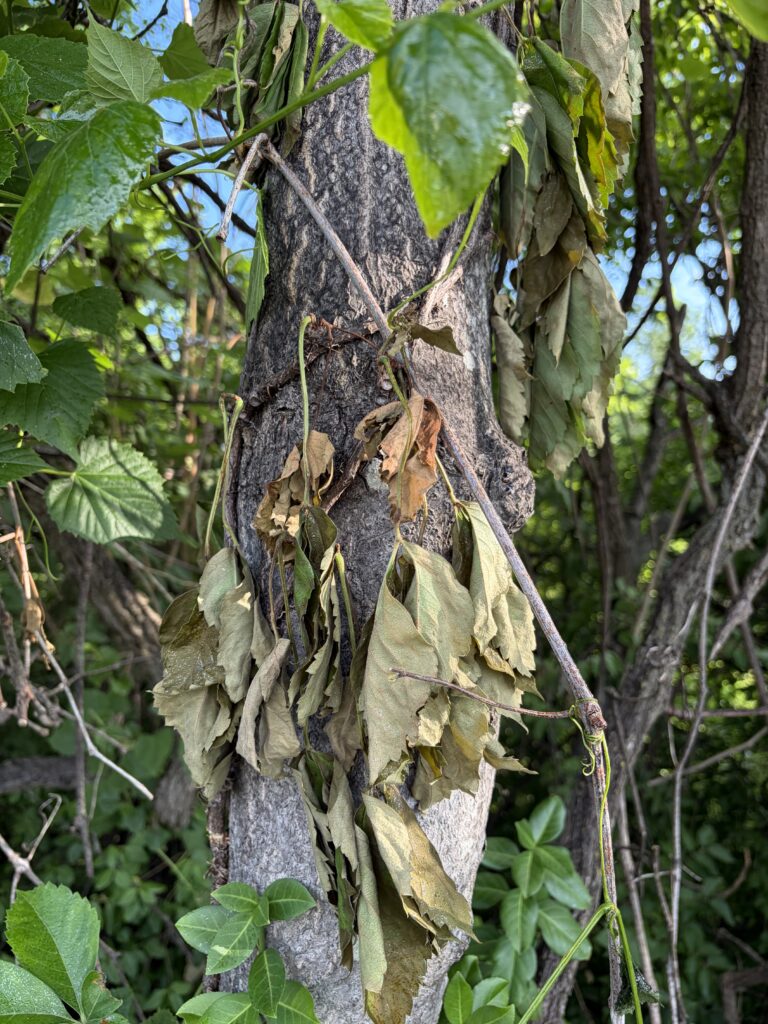
- Directly: SLF utilizes piercing-sucking mouthparts to directly pierce tender plant tissues. Sucking up plant sap causes wilting, flagging, and death of young tree branches in severe cases.
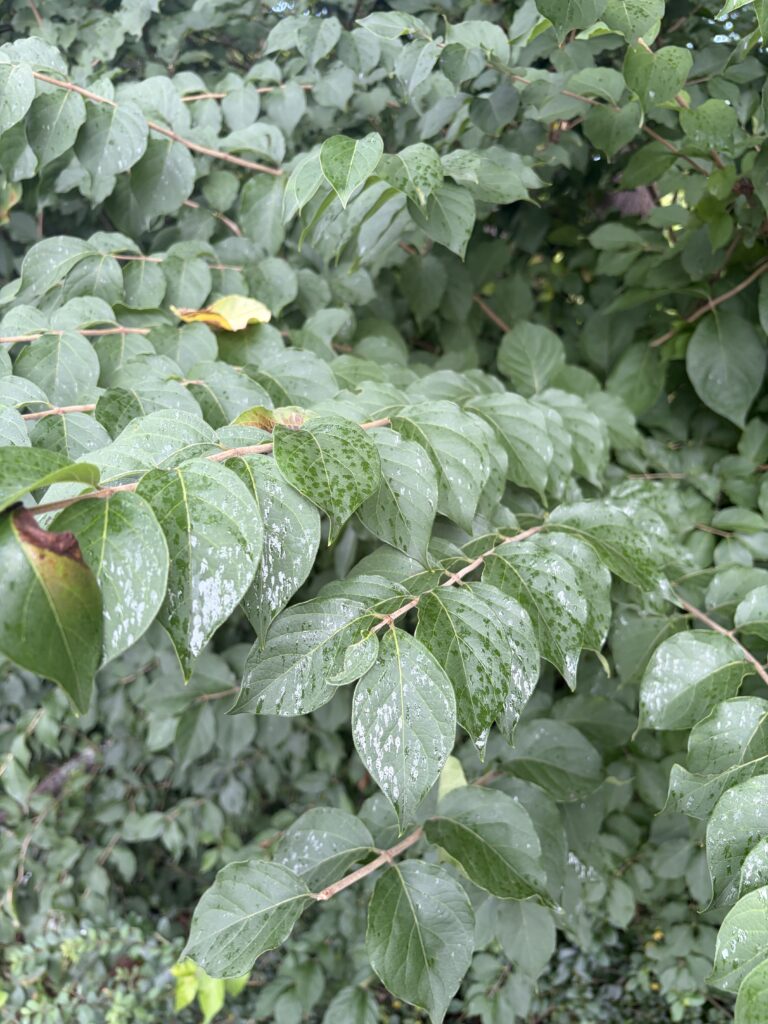
- Indirectly: SLF excretes honeydew, which is a very sugary, sticky substance. Honeydew is a nuisance for everybody, as honeydew can coat anything below feeding populations. Honeydew is also the fungal growth medium for sooty mold, which prevents photosynthesis in the plant.
Monitoring for SLF
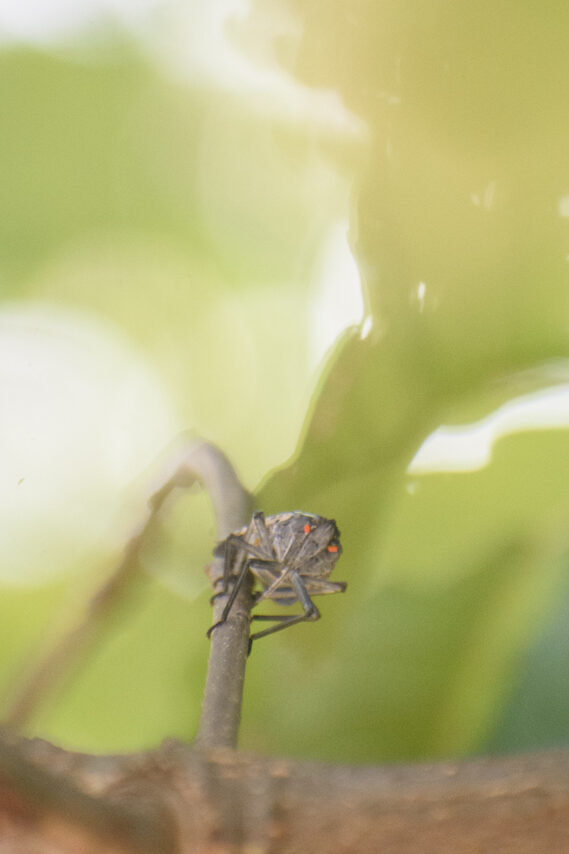
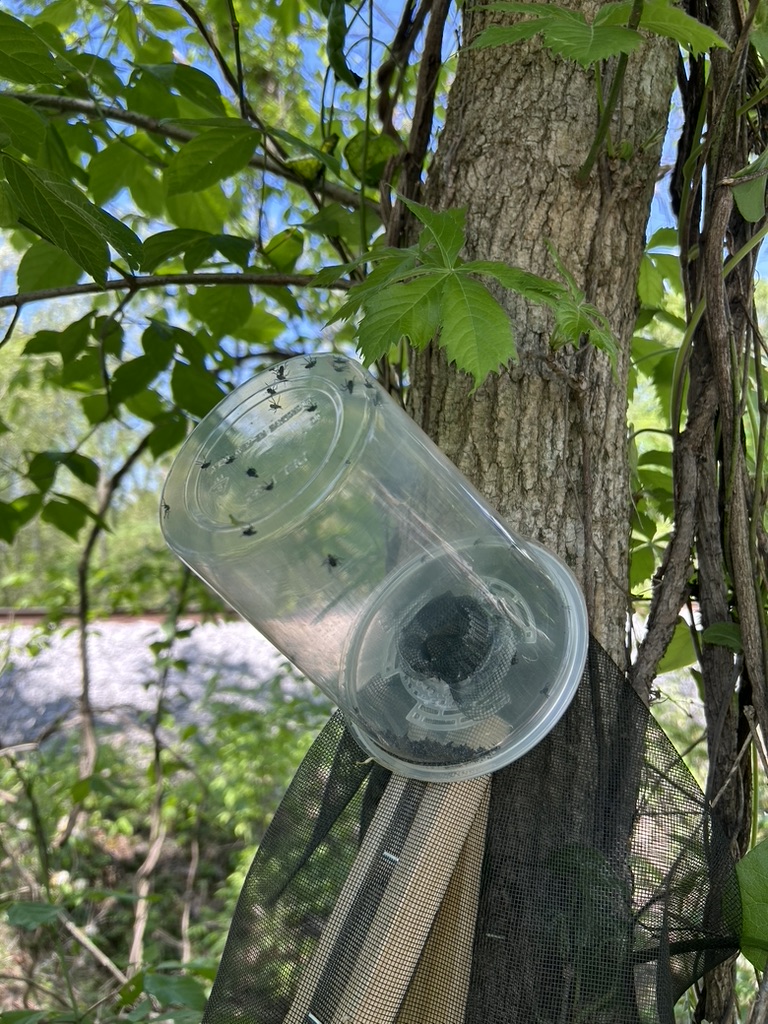
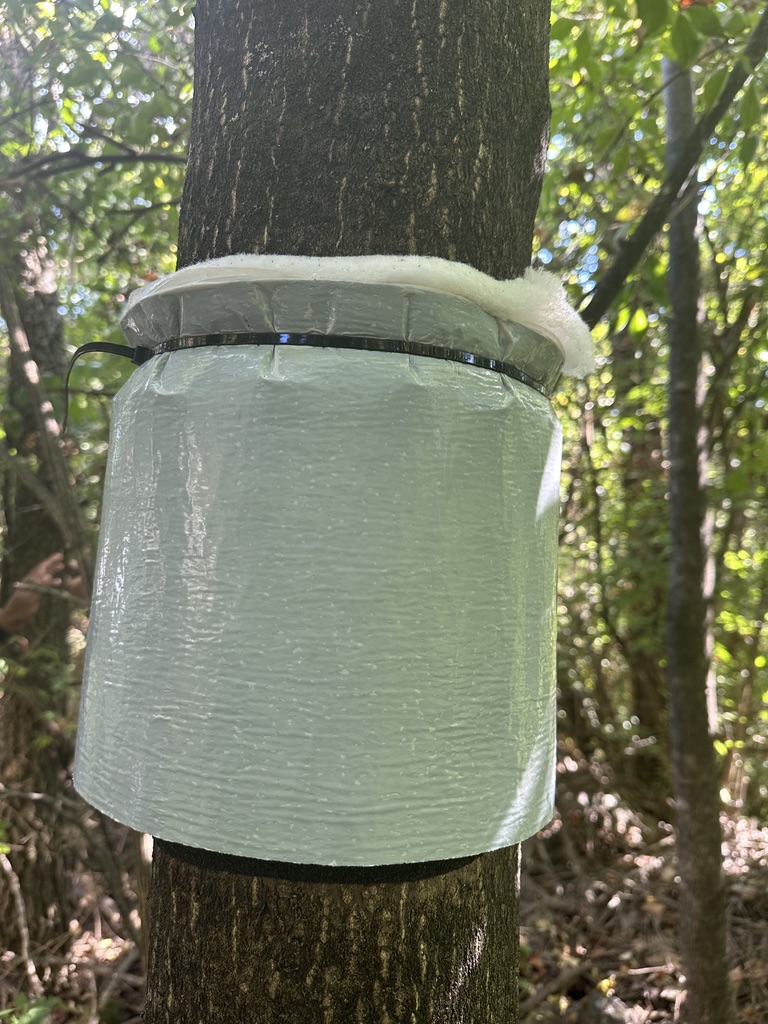
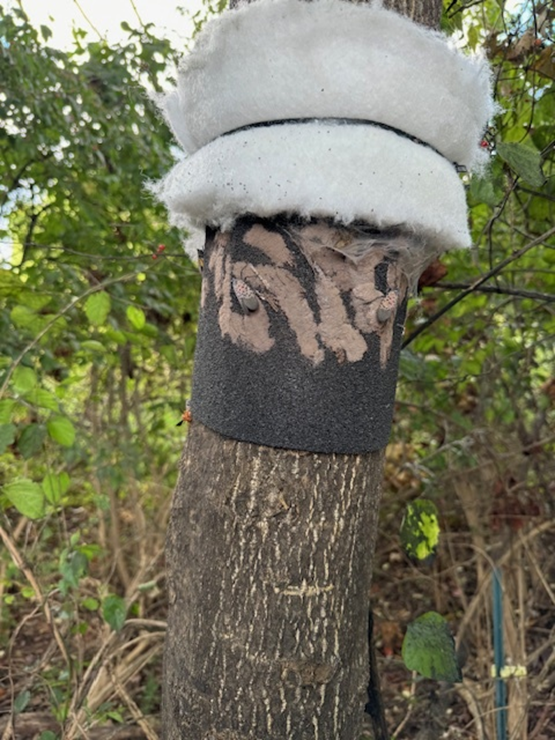
Active monitoring for SLF includes the following:
- Visual observation (under
- Circle traps (monitors nymph and adult activity)
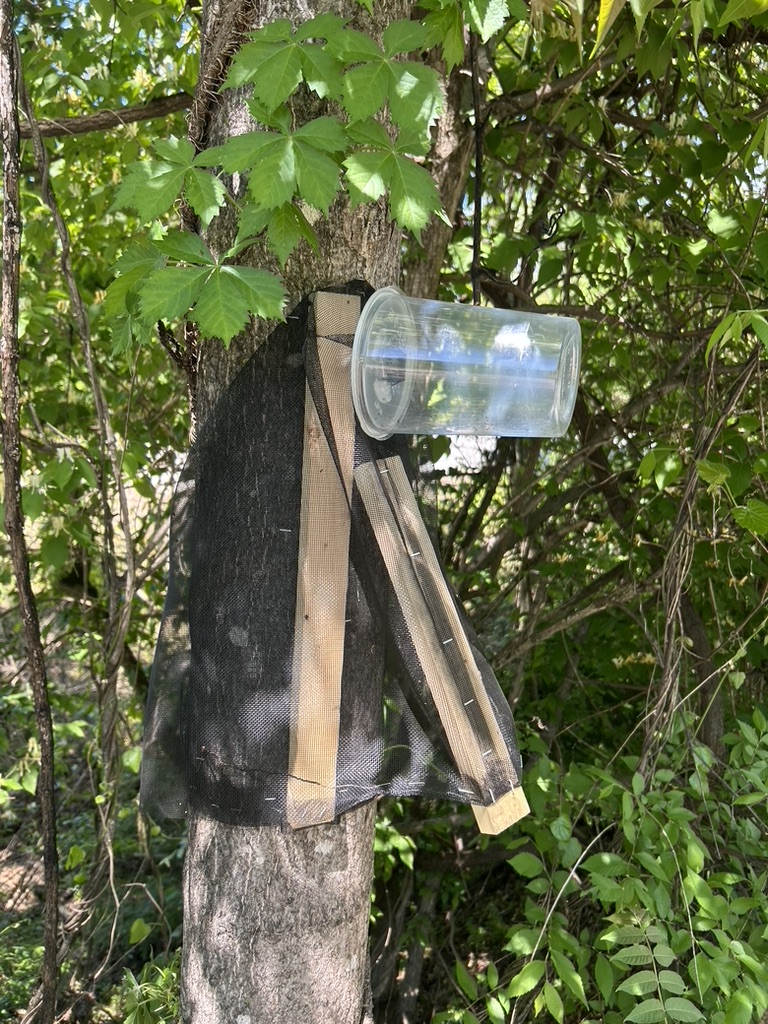
- Lamp shade traps (monitors egg masses being laid by female SLF)
Please report SLF if you are not located in the seven counties listed in the “Take Action” box above in the state of Tennessee .
Management for SLF
Cultural control
- Egg masses: Smashing an egg mass with an old credit card (or scraper card) and scraping it off of the tree into a baggie filled soap water or rubbing alcohol before removing it.
- Nymphs & adults: physically removing thema nd stomping on them to kill them.
Chemical control – the following active ingredients can be used to help control SLF:
- bifenthrin, beta-cyfluthrin, and dinotefuran
Resources
- Barringer L, Ciafré CM. 2020. Worldwide feeding host plants of spotted lanternfly, with significant additions from North America. Environ. Entomol. 49:999-1011. https://doi.org/10.1093/ee/nvaa093.
- Gireesh M, Hale FA, Grant JF, et al. 2024. Spotted lanternfly. University of Tennessee Extension (W1032). https://utia.tennessee.edu/publications/wp-content/uploads/sites/269/2023/10/W1032.pdf
- Murman K, Setliff GP, Pugh CV, et al. 2020. Distribution, survival, and development of spotted lanternfly on host plants found in North America. Environ. Entomol. 49:1270-1281. https://doi.org/10.1093/ee/nvaa126.
- Uyi O, Keller JA, Swackhamer E, et al. 2020. Spotted lanternfly (Hemiptera: Fulgoridae) can complete development and reproduce without access to the preferred host, Ailanthus altissima. Environ. Entomol. 49:1185-1190. https://doi.org/10.1093/ee/nvaa083.